
Suntec Tower 1, 7 Temasek Blvd, Singapore 036987
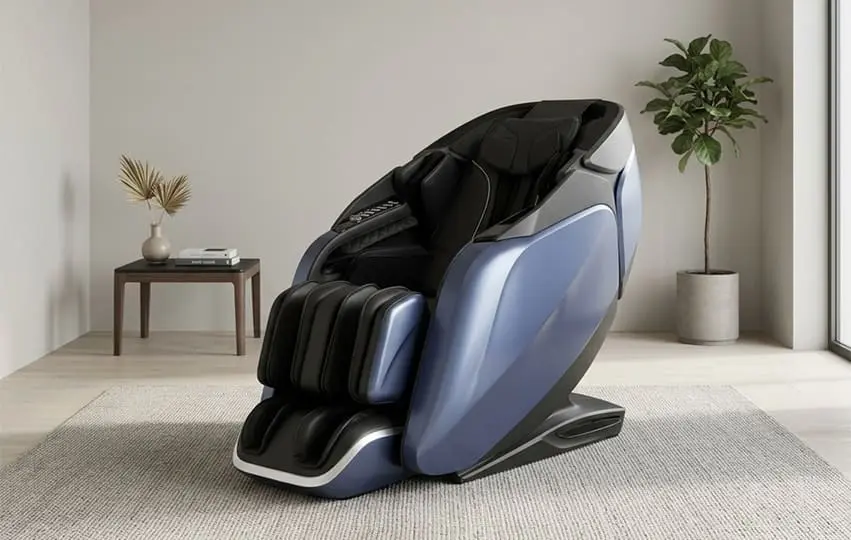
10 Features That Make AI Massage Chairs Different from Traditional Models
Over the years, massage chairs have shown significant evolution. Once massage chairs mainly consisted of vibrating seats, but today it has transformed significantly into wellness technology. This technology has been designed to adapt to individual needs. Traditional massage chairs do offer relaxation benefits, but AI-powered chairs have taken it to a new level.
These AI massage chairs have unlocked personalization and responsiveness, which truly sets them apart. If you’re considering an upgrade, an understanding of the basic differences between traditional and AI chairs is essential. Let’s find out the key details here.
1. Intelligent Body Scanning Technology
AI massage chairs come with the capability of performing detailed body scans before you start each session. While traditional massage chairs tend to follow fixed massage paths based on your body dimensions, this is completely different.
Traditional models are effective to a good extent, but it doesn’t appropriately align with the unique body shapes of different individuals. AI-powered models have changed the game altogether. They have sensors that detect shoulder position, spinal curvature, body height, and pressure points.
Thus, with such diverse information available, such chairs can easily customize the massage route, according to the individual needs. The overall massage experience feels precise and targeted.
2. Personalized Massage Programs
There are a limited range of selections and preset programs in the case of traditional chair, like relaxation, kneading, tapping, or stretching. AI massage chairs take the levels of customization much further.
These chairs understand body feedback and user preferences and recommend massage routines that are tailored to your specific goals. This can include:
- Relaxation after a long day
- Muscle recovery following physical activity
- Stress reduction
- Gentle daily maintenance
- Focused tension relief
With some advanced systems you can also get the advantage of saving your favorite settings for different members of the household. This helps in creating an actually personalized experience.
3. Adaptive Pressure Adjustment
The massage intensity needs of different individuals are bound to be different. While a traditional massage chair requires users to manually adjust pressure settings, AI massage chairs continuously adapt pressure levels.
In the case of traditional chairs, the intensity remains consistent. But AI massage chairs monitor factors like muscle resistance and body positioning. This allows it to adjust pressure levels as the massage progresses. In case a particular area appears sensitive, intensity is automatically reduced.
If there is a need for deeper stimulation, the chair will increase the pressure accordingly. With such dynamic adjustments, a more comfortable and balanced session is facilitated.
4. Enhanced Precision Through Advanced Rollers
Fixed roller mechanisms are used in many traditional chair models. These rollers move along predetermined tracks. However, in AI-enabled chairs, roller systems are adaptive and advanced. They have the capability of mimicking professional massage movements and techniques.
This combined with body scanning data ensures improved accuracy across the neck, shoulders, back, and lower body as well. With such levels of increased precision, users can experience a massage that feels far more natural and intentional as well.
5. Learning User Preferences Over Time
A highly impressive distinction in the case of AI massage chairs is their ability to learn. Every session is considered as completely separate in traditional chairs, wherein, you need to manually select all the settings, each time.
Some AI systems remember user behavior and adapt future sessions accordingly. If a user frequently prefers medium pressure with extra focus on the shoulders, the chair can prioritize those preferences during subsequent uses.
This evolving interaction creates a sense of familiarity and convenience.
6. Voice-Control Functionality
Modern consumers increasingly value hands-free convenience.
Traditional massage chairs rely heavily on remote controls and physical buttons. Although functional, these controls may interrupt the relaxation process.
Many AI massage chairs feature voice-control capabilities that allow users to initiate programs, adjust settings, or switch massage modes through simple spoken commands.
This seamless interaction enhances ease of use while contributing to an uninterrupted wellness experience.
7. Comprehensive Wellness Features
AI massage chairs often extend beyond basic massage functions.
Depending on the model, additional features may include:
- Zero-gravity positioning
- Heat therapy options
- Air compression systems
- Stretching programs
- Foot reflexology functions
- Bluetooth audio connectivity
- Guided relaxation settings
Traditional chairs may offer some of these features individually, but AI-powered systems frequently integrate them into cohesive wellness experiences that adapt to user preferences.
8. Improved User Guidance
For first-time users, navigating numerous settings can sometimes feel overwhelming. AI systems help simplify the process by offering intelligent recommendations.
Instead of guessing which massage program might be suitable, users can receive suggestions based on selected goals or detected physical conditions. This user-friendly approach reduces trial and error while improving confidence in using the chair effectively.
Traditional chairs generally require more manual exploration to identify preferred settings.
9. Greater Household Versatility
Families often consist of individuals with different comfort preferences. A massage intensity that feels soothing to one person may feel too strong or too gentle for another. Traditional chairs typically require repeated manual adjustments whenever a new person uses them.
AI massage chairs accommodate these differences more efficiently through individual user profiles and saved settings. Multiple users can enjoy experiences designed around their unique preferences without having to start from scratch every time.
This versatility makes AI models particularly appealing for shared living environments.
10. A More Responsive Experience
The highly significant difference may be the overall experience itself. Traditional massage chairs perform exactly as programmed. They execute predetermined routines consistently and predictably.
AI massage chairs, however, are designed to respond. They gather information, interpret user input, adjust techniques, and refine future sessions. This responsiveness allows the massage to feel less mechanical and more tailored to the individual using it.
For many users, this shift from static operation to adaptive interaction represents the next generation of home wellness technology.
Seamless Integration with Modern Lifestyles
Today's consumers increasingly seek products that complement their connected lifestyles, and AI massage chairs are designed with this expectation in mind.
Many advanced models offer features such as mobile app connectivity, allowing users to customize massage sessions directly from their smartphones. Some systems provide usage tracking, enabling individuals to monitor their favorite programs and session frequency over time.
In contrast, traditional massage chairs tend to function as standalone devices with limited interaction beyond their built-in controls.
This integration with everyday technology adds another layer of convenience to the user experience. Whether adjusting settings remotely, saving personalized routines, or accessing new features through software updates, AI massage chairs fit naturally into smart homes and technology-driven environments.
For users who value both comfort and connectivity, this ability to blend wellness with modern living represents yet another advantage of choosing an AI-powered massage chair.
Are Traditional Massage Chairs Still Relevant?
Despite the advancements offered by AI, traditional massage chairs still have their place.
They can provide dependable relaxation, straightforward operation, and may appeal to individuals seeking simpler functionality.
Choosing between traditional and AI-powered options ultimately depends on personal preferences, lifestyle needs, and desired levels of customization.
Those who prioritize adaptability, personalized experiences, and advanced convenience may find AI massage chairs particularly attractive. Meanwhile, users seeking basic massage functionality may remain satisfied with more conventional models.
Final Thoughts
AI massage chairs are redefining what consumers can expect from at-home relaxation technology. Through intelligent body scanning, adaptive pressure control, personalized programs, and learning capabilities, these innovative systems aim to create experiences that feel uniquely tailored to each user.
While traditional massage chairs continue to deliver comfort and relaxation, AI-powered alternatives introduce a new dimension of responsiveness and convenience that aligns with today's expectations for smart living.
As wellness technology continues to evolve, the distinction between simply receiving a massage and experiencing one designed specifically for you is becoming increasingly clear. For many households, that difference may shape the future of relaxation at home.